
In the second part of our insightful conference on modern sexology, we had the pleasure of bringing together a diverse panel of experts consisting of Silje-Håvard Bolstad, Christine Marie Jentoft Teigland and Alexander Sørli. The conversation was led by Dominic Daviesa pioneer in gender and sexuality support, in collaboration with moderator Newt Petride. The panel addressed some of the most central and complex aspects of Gender, Sexuality, and Relationship Diversity (GSRD).
A recurring theme in the discussion was the limitations of the Diagnostic and Statistical Manual of Mental Disorders (DSM). Davies criticised the DSM for its binary and heteronormative approach, which often excludes sexual problems in same-sex relationships. This criticism raises important questions about whether psychological diagnostic systems are sufficiently inclusive and adaptable.
Davies also challenged the concept of sexual addiction, and pointed out how financial interests can sometimes drive treatment programmes more than a genuine understanding of complex sexual experiences. This perspective emphasises the need for a more nuanced and holistic approach to sexology.
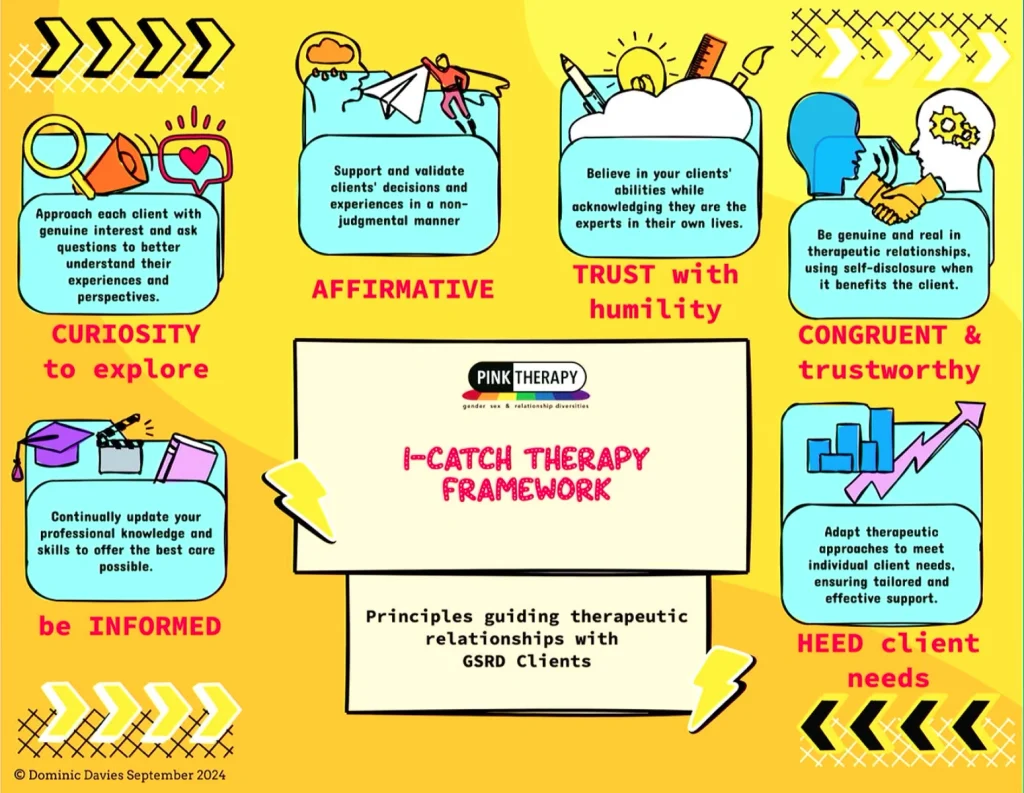
Davies introduced the ICATCH model, which stands for:
This model aims to offer a holistic approach to therapy that recognises and validates the autonomy and experiences of clients, especially those from queer and diverse backgrounds.
The panel was unanimous in the need for a kaleidoscopic therapy approach-one that includes multiple perspectives to understand the whole person. This is in line with Davies' vision of integrated therapeutic models, which will be explored further in an upcoming book on GSRD therapy.
Technological challenges in research
Alexander Sørli highlighted issues related to collaborative platforms in research and the often opaque decision-making processes in editorial teams. This lack of transparency can complicate the publication of nuanced research on trans issues.
Ethical considerations in trans research
Sørli pointed out that trans populations are often small, which can create anonymity challenges in research. This makes it even more important to maintain ethical research practices.
Silje-Håvard Bolstad emphasised the importance of respectful language in academic studies. Using the language that transgender people themselves use is crucial to avoid historical patterns of pathologisation. The panel agreed that it is important to include transgender people in research from start to finish to ensure both ethical and professionally sound work.
The discussion also touched on intersectionality and the complex identities that many people have. The panel emphasised that research must have an intersectional perspectivenot only for the sake of representation, but also to Collect more comprehensive data on the experiences of marginalised groups.
Historical mistrust between marginalised groups and researchers was a key theme. The panel emphasised that building trust requires the inclusion of these groups in decision-making processes and reference groups in research projects.
Sørli pointed out that including transgender people in research teams can improve both the research environment and the quality of the research.
Bolstad and Sørli also discussed the importance of "grey literature", or non-peer-reviewed green literaturewhich often contain valuable insights that are overlooked in traditional academic publications. Such sources can provide unique and important knowledge about marginalised communities.
The session ended with a Encouraging further networking and collaboration among participants, with encouragement to continue discussions and share perspectives over lunch. This spirit of co-operation is essential to promote inclusion and understanding within sexology and the GSRD field.